Russia has not sold this grade of gasoline since 2005. It is selling it again now.
Prime Minister Mikhail Mishustin signed a decree this week authorizing the sale of Euro-3 grade gasoline through the end of 2026, permitting select refineries to place fuel with sulfur content of up to 150 milligrams per kilogram into circulation, roughly fifteen times higher than the current Euro-5 standard's limit of 10 milligrams. The decree, described in its own text as a measure to "improve fuel supply reliability" and prevent "destabilization of the domestic motor fuel market," applies only within Russia and cannot be sold under a single Eurasian Economic Union conformity mark, meaning it is barred from other EAEU member states. Kommersant had previously reported Russian authorities were even considering permitting Euro-2 grade fuel, an even lower standard, before settling on the current measure.
The decree follows months of escalating disruption to Russia's refining sector. Ukrainian drone strikes have hit refineries, storage depots, and pipeline pumping stations across the country, with Ukrainian officials describing the campaign as retaliation for continued Russian attacks on Ukrainian territory. This week alone, Ukrainian President Volodymyr Zelenskyy said forces struck Russia's major Ufa refinery for the second time in a week, a facility located more than 1,000 kilometers from Ukraine and one of the country's largest producers of lubricants. Separate strikes have hit Gazprom Neft's Moscow refinery, which normally supplies up to 40 percent of the fuel consumed in the Russian capital, and Tatneft's Taneco refinery. Together, Russian media estimate the two outages alone have removed roughly 600,000 barrels a day of refining capacity.
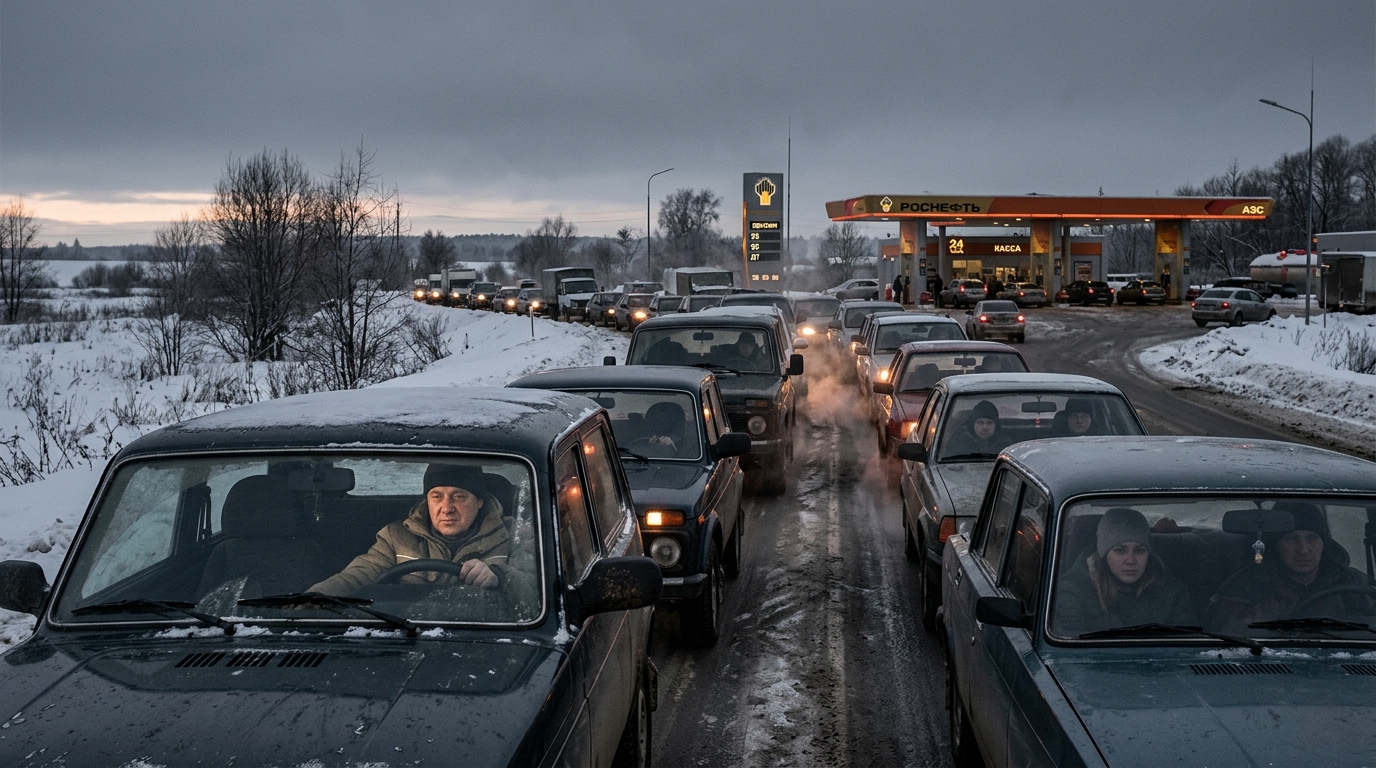
The consequences are visible at petrol stations from Moscow to annexed Crimea. By late June, some form of fuel rationing was reported in more than half of Russia's regions, with drivers limited to 20 to 30 litres per vehicle at many stations and jerry-can filling largely banned. Long queues have become routine even in the prosperous capital, with residents describing hours-long waits and, in some cases, completely dry pumps. The mayor of Irkutsk in Siberia has gone so far as to order portable toilets brought in for drivers waiting in line. Fuel prices have risen for five straight weeks, climbing at roughly twice the pace of overall inflation, with the national average reaching 71.20 rubles per litre, about $3.47, as of late June. Mishustin has separately ordered Russia's state statistics agency to suspend its weekly public fuel price reports.
Kremlin spokesman Dmitry Peskov confirmed this week that Russia is actively negotiating gasoline imports from unnamed countries, saying deals would proceed "if agreements can be reached at acceptable price points." President Putin himself acknowledged over the weekend that the shortage had become serious enough to warrant direct government intervention, and authorities have since banned petrol and jet fuel exports outright while weighing a similar ban on diesel. One energy analyst told Al Jazeera that indirect evidence suggests Ukrainian strikes have disabled roughly a quarter of Russia's total refining capacity, a disruption compounded by ordinary seasonal demand. For a country that ranks among the world's largest oil producers, the sight of its own capital rationing fuel marks one of the more visible ways the war has reached into daily Russian life.

Comments (0)
Please log in to post a comment.
No comments yet. Be the first!