
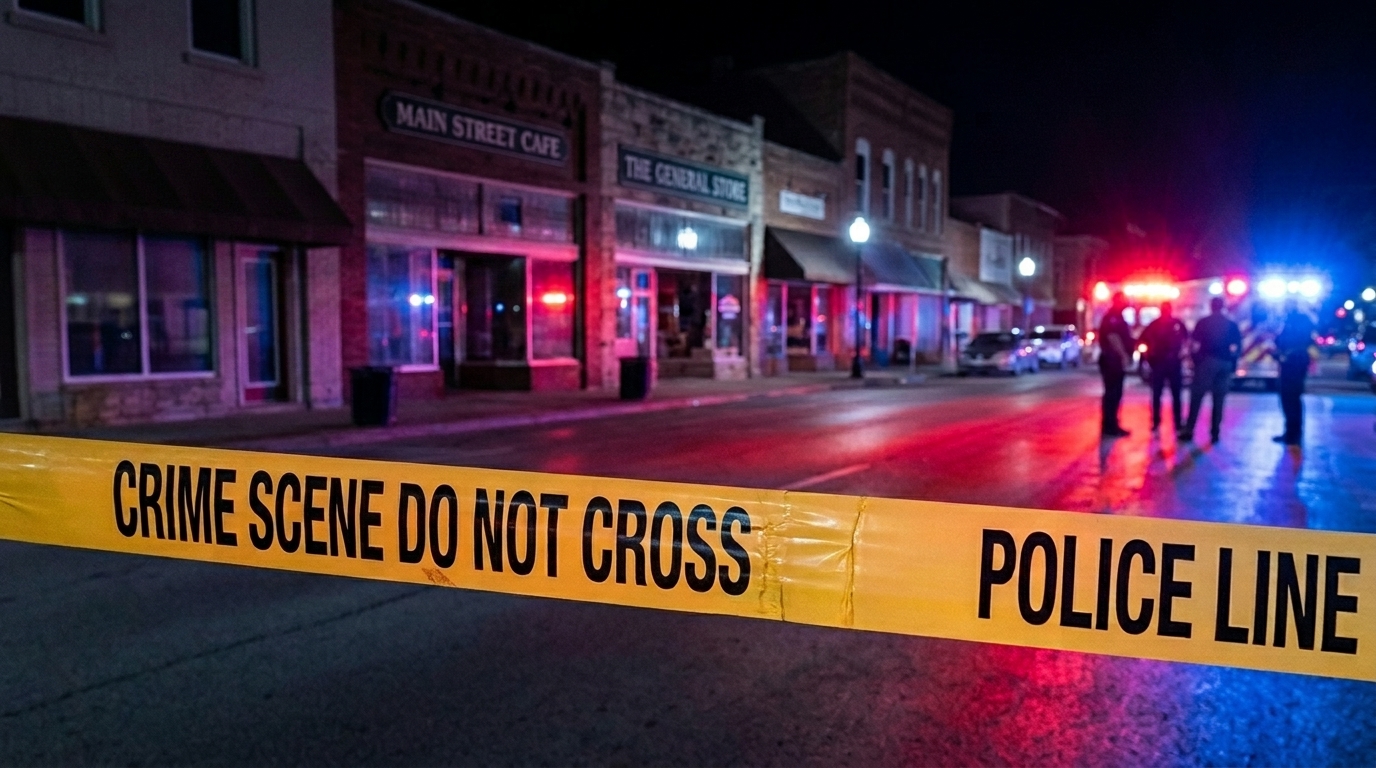
The call came in just before noon on June 1, 2026. Then another call. Then another. Over the course of a few hours, a single gunman moved through Muscatine, Iowa - a quiet city of about 24,000 people on the Mississippi River - shooting people in what police later called a spree attack.
By the time the shooting ended with the gunman dead, six civilians had been killed and several others wounded. Seven lives — including the shooter's - lost on an otherwise ordinary Sunday in a community that had no reason to expect violence on that scale.
Muscatine, like most small American cities, is not accustomed to this kind of event. Its residents tend to know each other. Its streets feel safe in the way that small-town streets are supposed to feel safe. The shock was profound.
Details about the gunman emerged slowly in the days that followed. Law enforcement officials described a man with a documented history of mental health struggles who had become increasingly isolated in the months before the attack. He had legally purchased the firearms used in the shooting. There were no previous indicators, they said, that had triggered any intervention.
This pattern — legal firearms, mental health history, isolated individual, no prior intervention — has become almost numbingly familiar in the aftermath of American mass shootings. Advocates for stronger gun laws point to it as evidence that better background checks, red flag laws that allow courts to temporarily remove guns from at-risk individuals, and waiting periods would save lives. Opponents argue that the focus should be on mental health treatment and that constitutional rights cannot be restricted based on prediction rather than action.
Iowa's congressional representatives issued statements of condolence. There were vigils in Muscatine. The national conversation about gun violence flared briefly on social media, as it does after every such incident, and then began to subside.
For the families of the six people killed — at a barbershop, at a convenience store, outside a church — the policy debate is secondary. They are left with the permanent, irrevocable absence of people they loved, killed on a Sunday that should have been unremarkable.
The United States averages several mass shootings per week by most tracking definitions, though incidents of Muscatine's scale - a spree across multiple locations by a single shooter — are somewhat less common than single-site events. Each one leaves the same aftermath: grief, argument, and ultimately, the continuation of the underlying conditions that make the next one possible.
Comments (0)
Please log in to post a comment.
No comments yet. Be the first!