
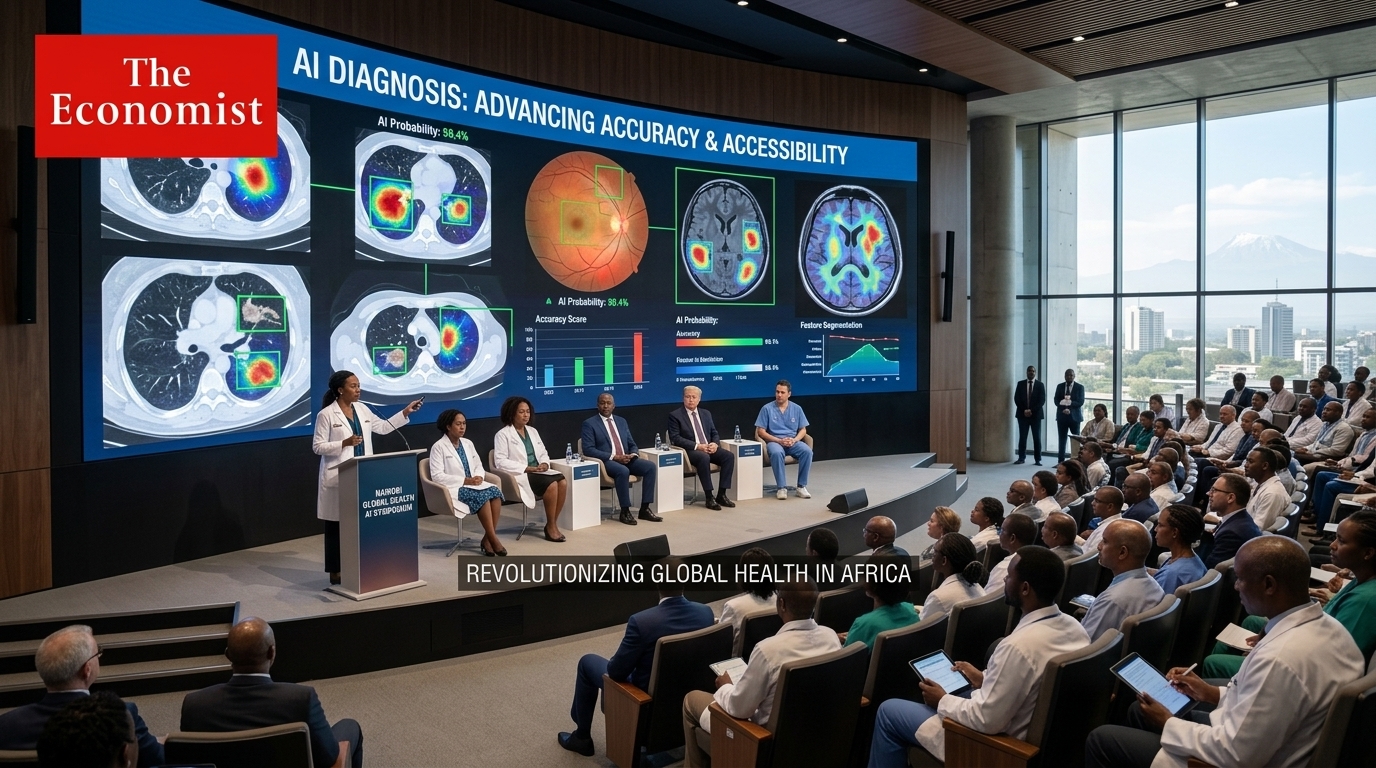
Nairobi Becomes Africa's AI Health Capital
Nairobi has established itself as the leading African city for cross-continental dialogue on artificial intelligence in healthcare, hosting a series of major summits and technical showcases that are reshaping how governments and health authorities across Africa approach clinical diagnostics and patient management.
The Kenyatta International Convention Centre has emerged as a central venue for these gatherings. Earlier this year, the inaugural Africa Forward Summit, co-hosted by Kenya and France, placed AI-powered healthcare including local production of medicines and continental health capacity at the core of its agenda. More recently, the World Health Summit's Regional Meeting 2026, hosted by the Aga Khan University East Africa, convened leaders across 80 sessions to map out practical steps for building resilient health systems using digital technology.
Organisers described the moment as a shift from concept to execution. "The themes being discussed are deeply interconnected and will result in a blueprint for a new Africa that reflects a shift from addressing individual challenges to building a coherent health ecosystem," said the president of the Regional Meeting.
AI in the Clinic: Tools Being Piloted Across the Continent
Researchers showcasing work at Nairobi's recent events have highlighted AI-powered clinical diagnostic tools being piloted across several African health systems. These include image recognition systems that assist in the early diagnosis of tuberculosis, cancers, and ophthalmological conditions, as well as AI-driven patient triage platforms designed to reduce waiting times at overburdened public hospitals.
Several platforms are also being adapted to optimise supply chain logistics predicting medicine stock-outs in remote facilities and flagging when cold chain equipment is malfunctioning, problems that have traditionally been identified only after the damage is done.
The Infrastructure Challenge
A recurring theme across Nairobi's healthcare AI discussions has been the mismatch between AI tools built for high-income health environments and the realities of African healthcare infrastructure. Researchers have pushed for what they describe as "right-sized" AI modular, distributed systems that work within Africa's existing energy availability and connectivity constraints, rather than high-cost data centres built to Western specifications.
Kenya's own digital health framework, the country's growing tech talent pool in Nairobi's Silicon Savannah district, and an expanding network of city-based hospitals that have adopted electronic health records are all cited as foundations that make practical AI deployment more achievable here than in many peer economies.
What to Watch
With the African Union developing continental AI governance frameworks and multiple donor organisations directing funds toward digital health in sub-Saharan Africa, Nairobi is positioned to remain at the centre of this conversation. The question over the next 12 to 24 months is whether the tools showcased at conferences translate into scaled, sustained adoption across health systems with varying levels of funding and technical capacity.


Comments (0)
Please log in to post a comment.
No comments yet. Be the first!