
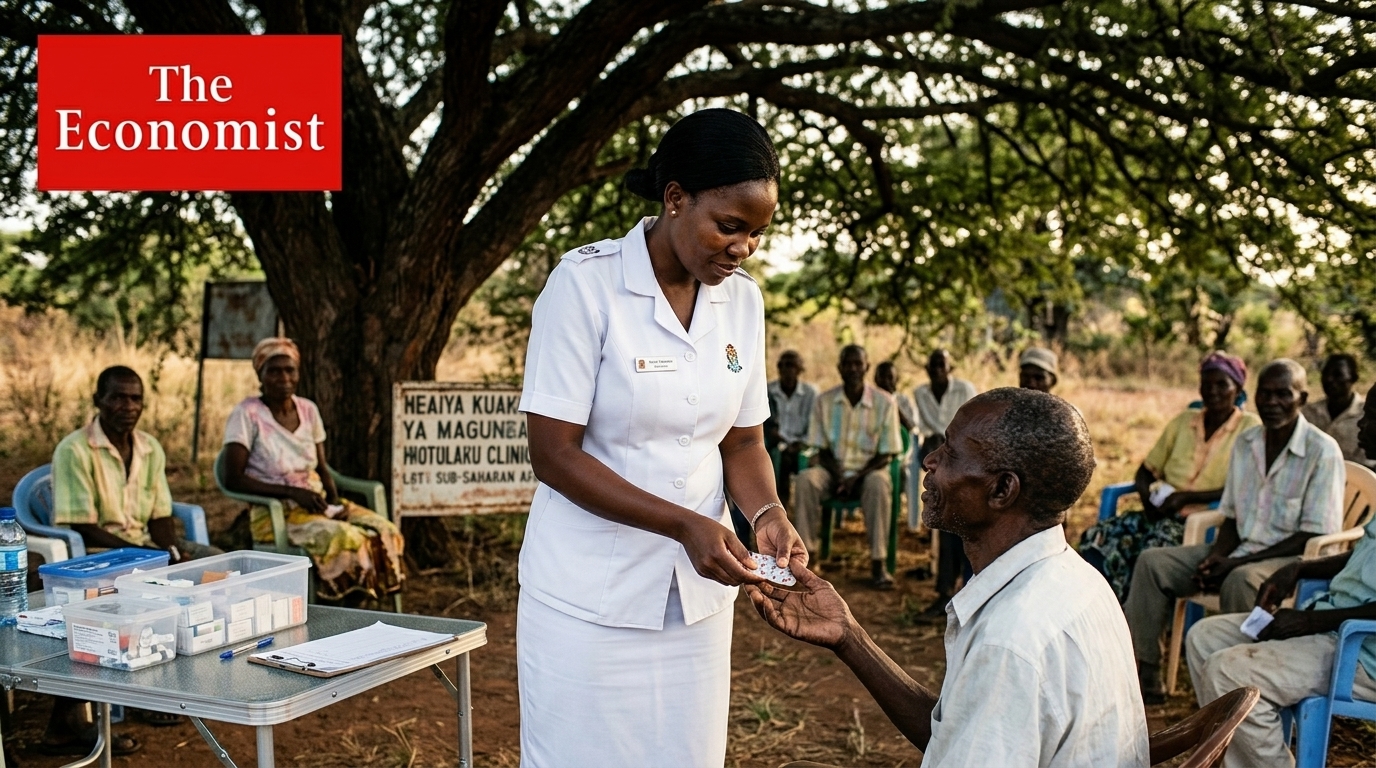
For nearly two decades, PEPFAR — the President's Emergency Plan for AIDS Relief — has been one of the most successful foreign aid programs in American history. Since its creation under President George W. Bush in 2003, it has been credited with saving more than 25 million lives across Africa and elsewhere by funding the provision of antiretroviral therapy to people living with HIV.
In 2026, that program is being dismantled — or at least radically restructured — by the Trump administration as part of a broader pullback from foreign aid commitments.
The results are already showing up in the most tragic way possible: people are dying.
Healthcare providers in South Africa and Mozambique have been speaking out in the first week of June 2026, describing what is happening on the ground in clinical terms that cannot fully convey the human weight of the situation. Patients who have been on antiretroviral therapy for years are being told their medication supplies are running out. Clinics that relied on PEPFAR funding for everything from drugs to staff salaries to testing kits are operating at reduced capacity or shutting down entirely. Pregnant women living with HIV who need treatment to prevent mother-to-child transmission are being turned away.
"Every gap in treatment is a potential death," one South African nurse told reporters. "We are watching people die from a disease we know how to treat."
The Trump administration has reframed its foreign aid philosophy around the principle that recipient countries should be working toward self-sufficiency rather than permanent dependence on American largesse. Officials have argued that in many cases, the aid was funding programs that host governments could and should be financing themselves.
There is some merit to the long-term goal of sustainability. But the manner of implementation — abrupt cuts without transition plans or bridge funding — has left public health systems scrambling. South Africa, for all its relative prosperity by regional standards, still relies on PEPFAR funding for a significant portion of its HIV treatment program. Mozambique, one of the poorest countries on earth, is far more dependent.
Global health organizations and advocacy groups have reacted with alarm. The Global Fund to Fight AIDS, Tuberculosis and Malaria issued an emergency statement calling on other donor nations to step in and fill the gap. Some European countries announced emergency contributions. But the scale of PEPFAR — roughly $7 billion annually — cannot be replaced quickly, or easily.
The political calculus in Washington, where cutting foreign aid has broad popular support, does not map neatly onto the arithmetic of survival for a 35-year-old mother in Maputo or a teenager in Durban who has been on treatment since birth. The gap between policy and its human consequences has rarely been so stark, or so avoidable.


Comments (0)
Please log in to post a comment.
No comments yet. Be the first!