
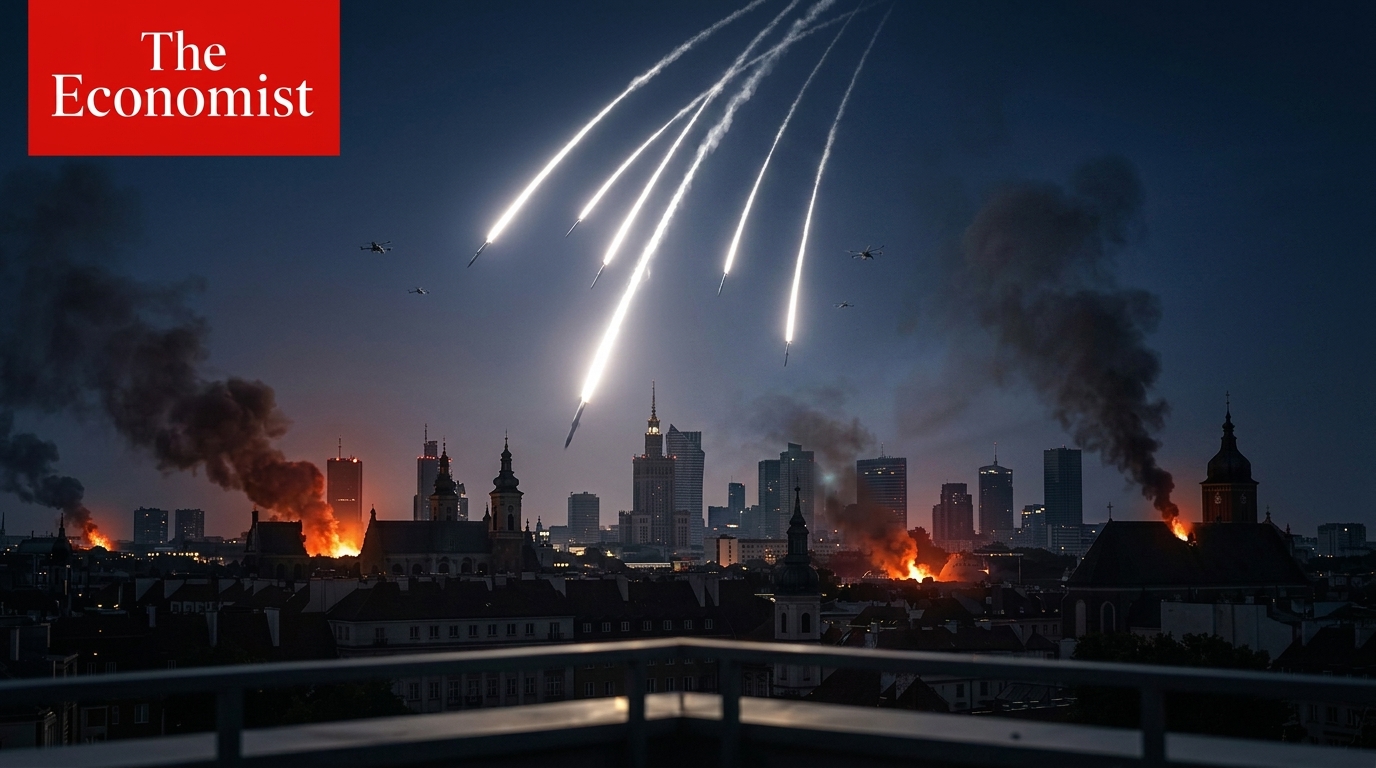
In late May 2026, something happened that many analysts had been quietly dreading for months: a Russian drone hit an apartment building in Romania. Not a military installation. Not a weapon depot. A place where ordinary Romanian civilians live.
Russia, predictably, claimed it was an accident. Almost nobody believed that. The consensus among Western military analysts and European government officials was clear: this was a deliberate act of provocation. A message, delivered in the language of ordnance.
Romania is a NATO member state. An attack on a NATO member state — even one framed as an "accident" — triggers the alliance's Article 5 mutual defense clause in theory. In practice, the implications are far more complicated. Article 5 has never actually been invoked in a scenario like this, and the alliance's response to what appeared to be a deliberate drone strike on a member's territory was being watched extremely carefully.
The context matters. Russia has been at war in Ukraine since its full-scale invasion in 2022. Over those years, the conflict has evolved in ways that would have seemed almost unthinkable at the start. Ukrainian drone attacks have struck Moscow. Russian missiles have repeatedly hit targets in cities that were once considered too far from the front line. The war has a grinding, expansive quality that regularly defies predictions about where lines will be drawn.
For Romania, the strike was shocking but not entirely surprising. The country shares a border with Ukraine and its Black Sea coast has been directly affected by the war's spillover — stray drone debris has been found on Romanian territory before, and there have been previous incidents that Romania and NATO attributed to Russian activity. But a direct hit on a residential building was something different in kind.
NATO allies convened emergency consultations. The language from Brussels and European capitals was firm: Russia had violated the sovereignty of a NATO member and the incident would not pass without consequences. What those consequences would actually be remained deliberately vague — the alliance was plainly walking a careful line between showing resolve and avoiding any action that could be misinterpreted as a move toward direct NATO-Russia military confrontation.
Russia's response was to dismiss the incident while simultaneously describing Ukraine's resistance as "illegal" and its own actions as proportionate responses to Western provocation. This kind of rhetorical inversion — presenting aggression as defense — has become a standard feature of Moscow's communications strategy throughout the war.
For ordinary Romanians, the strike was a rude awakening to just how close the war had come. Romania is not Ukraine. It was never supposed to be a theater of conflict. The fact that a Russian drone found its way to a Romanian residential building reinforced a deeply uncomfortable truth: NATO's eastern flank is not as distant from the war as its citizens might have hoped.


Comments (0)
Please log in to post a comment.
No comments yet. Be the first!