
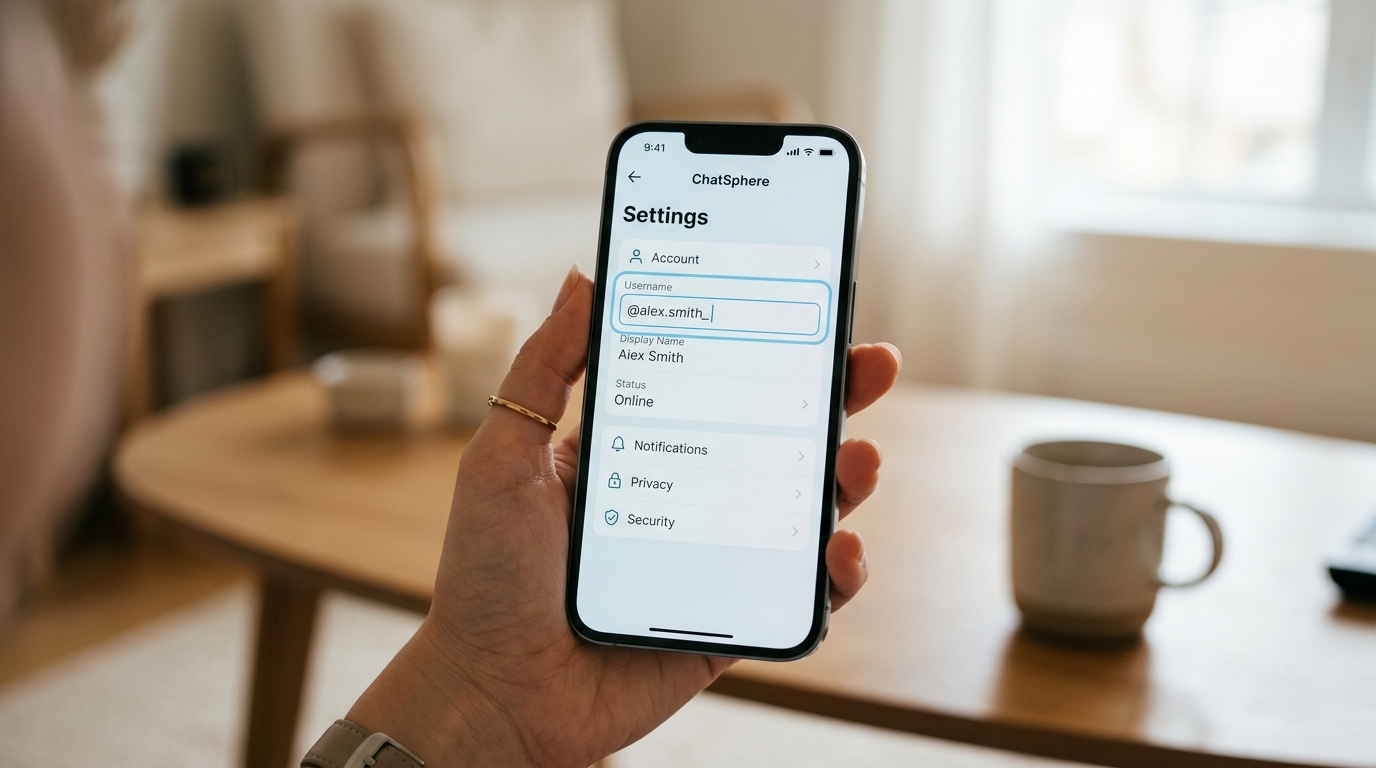
For sixteen years, a WhatsApp account has meant a phone number. That is about to change, one country at a time.
WhatsApp, the Meta-owned messaging platform used by more than three billion people, has opened username reservations ahead of a staged global rollout of the feature. Users can now update to the latest version of the app and navigate to Settings, Account, Username to secure a handle before the feature becomes fully active in their country. The first wave of countries, Algeria, Azerbaijan, Ghana, Libya, and Nepal, gets full functionality on July 7, with a second wave following on July 20 and the remainder of the world expected to follow starting in September. Once active, a username lets a person message someone new by handle instead of phone number, keeping their number hidden from anyone they have not already exchanged contact details with. Existing contacts who already have a person's number will continue to see it as before.
WhatsApp has built in several guardrails aimed at limiting abuse. Usernames must be between three and 35 characters, contain at least one letter, and cannot begin with "www." or end in domain suffixes like ".com" or ".net." There is no public directory or searchable list of usernames; someone must already know a person's exact handle to contact them for the first time. The company has also introduced an optional username key, an additional code required before a first message can be sent, and says it has built in limits on how many new contacts an account can message and protections against repeated attempts to guess a username.
Those safeguards have not been enough to satisfy every regulator. India's Ministry of Electronics and Information Technology sent WhatsApp a letter on July 1 giving the company three days to justify why it should not face regulatory action, and directing it to halt the rollout in India until government consultations conclude. The ministry argued the feature could "materially increase the incidence of online fraud, phishing, digital arrest scams and impersonation attacks," particularly the risk of usernames closely mimicking public officials, financial institutions, or well-known individuals. Early testing by TechCrunch found handles resembling prominent Indian political and business figures were still available to reserve. India is WhatsApp's largest market, with more than 500 million users, giving the standoff outsized significance for the platform's broader rollout plans. The Internet Freedom Foundation, an Indian digital rights group, pushed back on the ministry's intervention, arguing it lacks a clear legal basis and drawing a parallel to a similar overreach attempt targeting AI companies in 2024 that the same ministry later withdrew.
WhatsApp, for its part, has emphasized that the feature remains optional and that its slow rollout schedule reflects deliberate caution rather than resistance to feedback. "We're taking our time and listening to feedback so that when it rolls out later this year we get it right," the company said. Security researchers have offered a mixed verdict of their own. Rachel Tobac, chief executive of SocialProof Security, called the shift toward usernames a net privacy gain overall, since reducing how often people hand out their phone number cuts down on exposure to SIM-swap attacks and phishing. She acknowledged, however, that lookalike usernames still create real opportunities for impersonation, precisely the concern now driving India's regulatory scrutiny.



Comments (0)
Please log in to post a comment.
No comments yet. Be the first!